Radio & Documentary (1993-2008).
THREE IRISH PIANO TUNERS
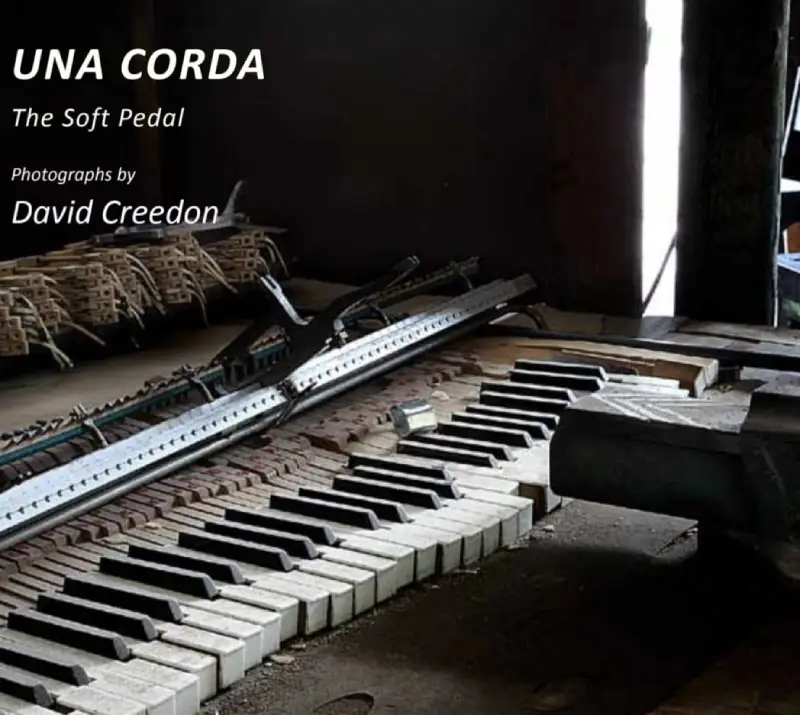
Cuba is famous for it’s outstanding musicians but more infamous for the many that have valiantly practiced – and still – on dented trumpets, broken viola’s and on many out-of-tune and under-repaired pianos. Three Irish Piano tuners in Cuba is a 2008 programme which features the stellar work done by founding members of Una Corda, an Irish non-profit music organization. Una Corda fundraised, purchased/collected piano supplies and offered training in order to support a new generation of Cuban piano tuners and repairers.
I helped organise various visits in Havana for the visiting team and was featured in the programme talking about my own transforming experience of composing on many such broken-down pianos in the capital.
SILENCE IN BLUE (BBC 3 Radio play)

I was invited by the celebrated Trinidadian-British composer, Dominique LeGendre, to sing vocals for this Drama On Three series play – written by Sarah Woods and directed by Claire Grove.
An Aboriginal woman tells the story of a woman traveller on walkabout. Another woman has escaped to Australia. Real and fictional journeys collide when the two women meet.
Theatre
BORRADORES
SILENCE IN BLUE (BBC 3 Radio play)
I was invited by the celebrated Trinidadian-British composer, Dominique LeGendre, to sing vocals for this Drama On Three series play – written by Sarah Woods and directed by Claire Grove. An Aboriginal woman tells the story of a woman traveller on walkabout. Another woman has escaped to Australia. Real and fictional journeys collide when the two women meet.
Documentary: ALBUM (C4 TV)
ALBUM (APT Productions, 1995 – for BBC2 TV, UK)
In 1965 student Gilly Lacey bought an old photo album in a London second-hand bookshop. Thirty years later – as documentary film-maker – she returned to the album and decided to investigate how this seemingly aristocratic family could have ended up for sale. The search led to West Yorkshire and to discover the intriguing story behind the faded photographs. This story was of particular interest to me as it concluded in Grenoside, in the small Yorkshire village where I was born.
MUSIC: Japanese composer, Mieko Shimizu and I wrote two double cello pieces as part of the incidental music for this documentary.
Yerma (Lorca) National Theatre, New Work
THE PLAY: Originally written in 1934 it tells the story of Yerma, a young country woman, who is obsessed by motherhood, trapped in a loveless married with a sterile husband and living in a time and country characterized by deep conservatism and societal/religious repression. Yerma impulsively kills her husband but is later filled with remorse on realising that this act does not free her: societal norms dictate that she can only have children with Juan, and by killing him, she has killed her only chance of obtaining what she truly desires more than anything: a child.
MUSIC: I was commissioned to write 12 songs for voice, choir and guitar for this experimental production – much set in the Welsh language. Understanding Lorca’s symbolic references was key: running water and milk symbolise Yerma’s hope of becoming pregnant; the rose, the joy of motherhood; rocks, sand and shadows, sterility. Most of the actors had fine singing voices resulting in freedom to write more complex harmonies/melodic lines. A real joy, too, to compose without the pressure of performance. Andy Robinson (guitar) helped to develop some themes and, luckily, made basic recordings as the work was never filmed or officially recorded.
The Farmer’s Bride (Wild Iris Theatre, 1997). Dir. Polly Irving & Adjoa Andoh
THE PLAY/POEM: This moving play was based on the poem by the same name by Charlotte Mew (1869-1928) and cast to include authentic characters of colour.
The poem itself was written at a time when women’s rights were emerging as a central political issue. It addresses the powerless of women, with a duty to obey but of the protagonist’s rebellion through emotional/physical withdrawal. The farmer expresses his own self-entrapment: a man who feels he must force his wife to coerce whilst obsessively wanting her to freely love him. Wild Iris took Mew’s poem as starting point and inverted the trajectory of its story. The farmer’s bride finds herself trapped within a loveless and duty-bound marriage but, here, she falls in love with another woman and the play explores their love in the hostile context of the time.
MUSIC: Using just two cellos – to represent the two women – the first major theme expresses the sadness and struggle in the bride’s marriage. The second – more dynamic, movement – celebrates the two women’s love in the hostile context of the era.